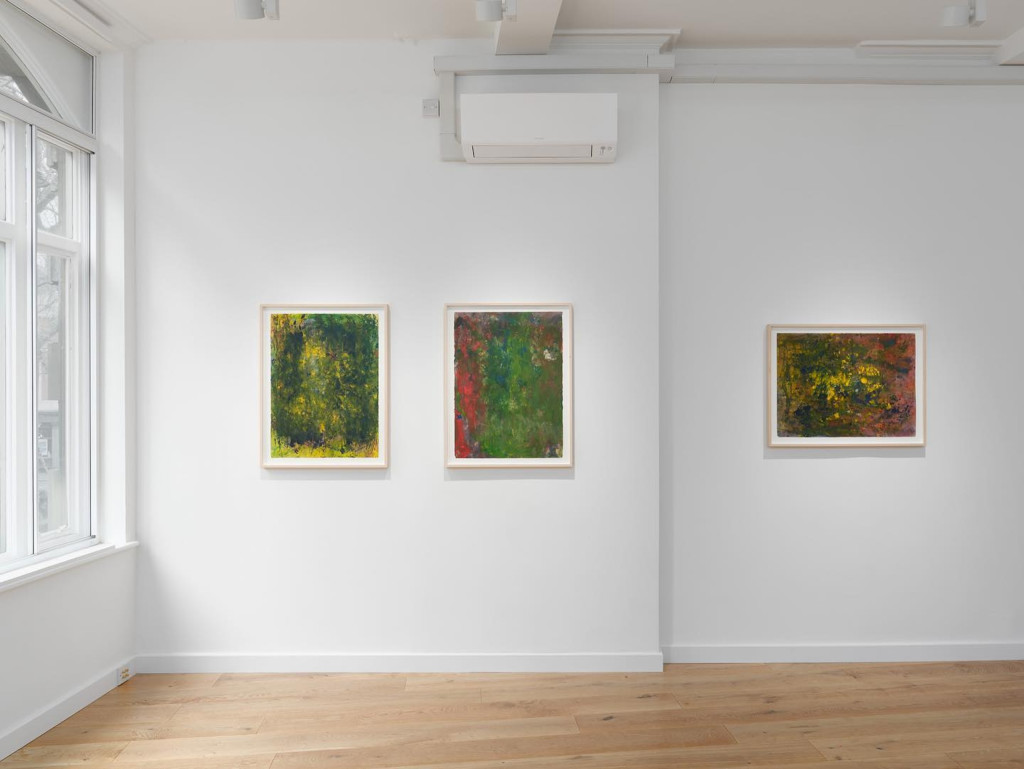
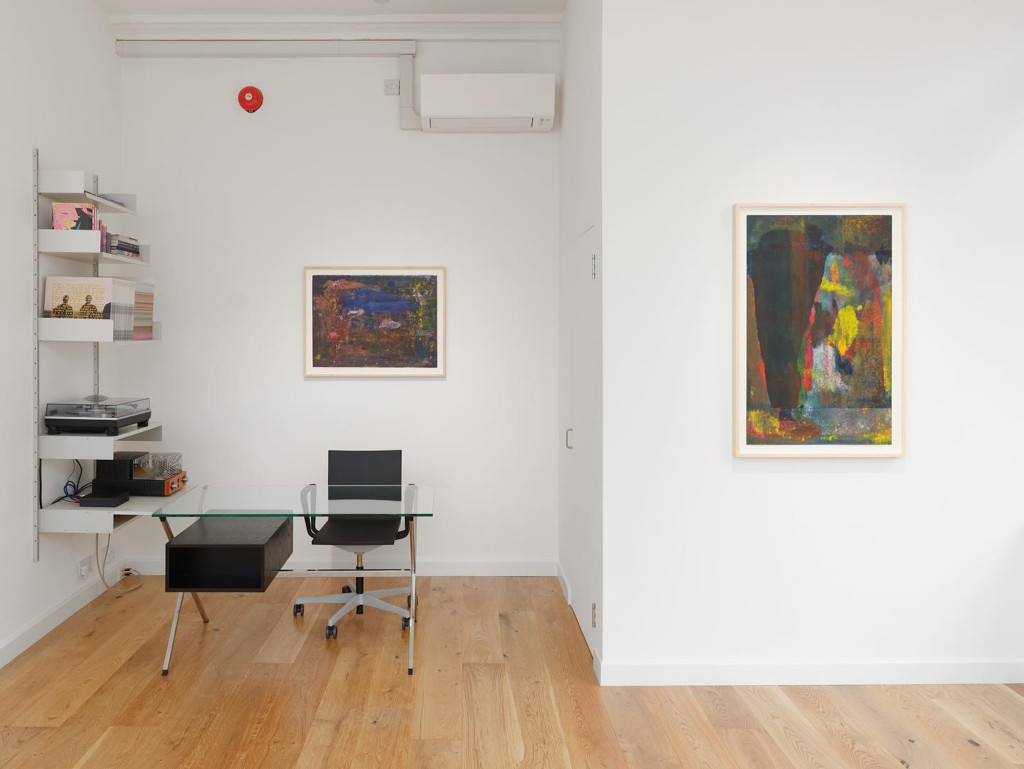
A solo exhibition of works on paper by Winston Branch, Fragments of Light is presented in collaboration with Varvara Roza Galleries.
If you would like a catalogue of the works, please email: cedric@cedricbardawil.com
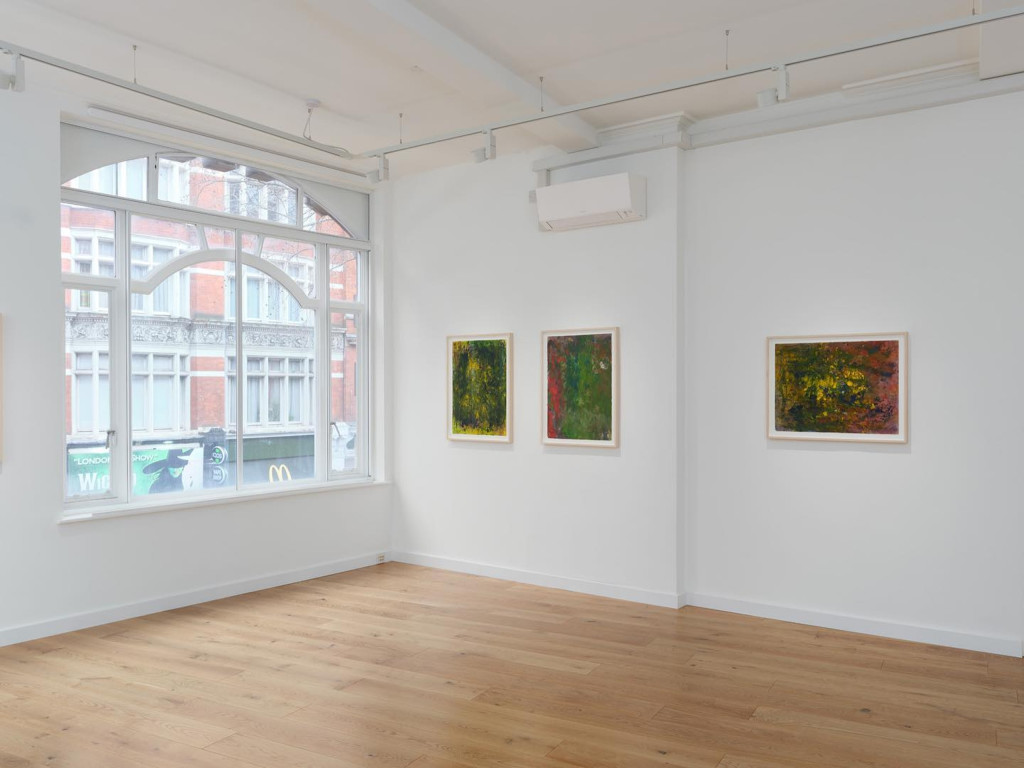
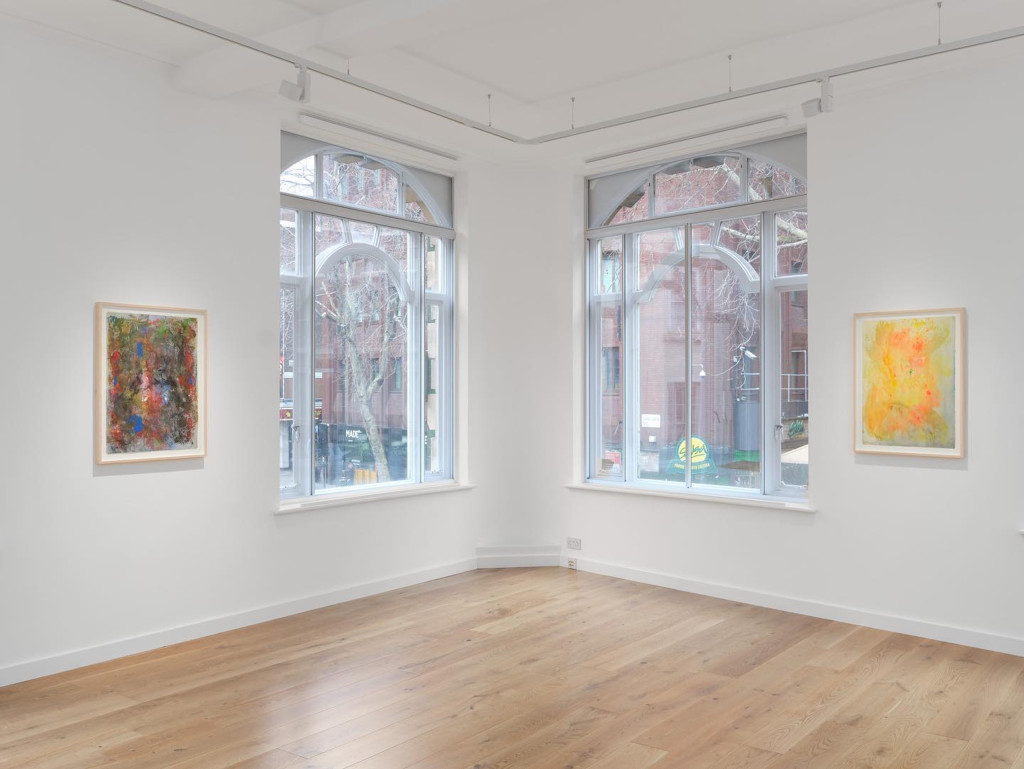
“Fragment of light”, why does a work have to have a title? Is it a Western mark of identity? In time and space, there are no such demarcations. We live in the moment and not in the past or the future. The works which I have been making over the last many years are questioning what we see and how the mind responds to it. Therefore, it’s about feeling through the senses. For me, colour is light and light is feeling. The intimacy of the work should be very intoxicating, like an ejaculation of the senses – euphoric! The artists that I had been revisiting at that time were Tintoretto (1518-1594), Titian (1479-1576) and Giorgione (1476-1510). All these artists were Venetian painters exploring the possibility of aerial perspective with the magic of paint. They allowed me to use the amorphous substance of paint to evoke the illusionary feeling of self. – Winston Branch, 2023
Perhaps the safest and most exhilarating place in the world, for a devotee of British abstraction, is within arm’s length of any first-rate painting by Winston Branch. In that zone, where the artist’s decisions register like a kinaesthetic shot, awakening your sense of touch as well as engaging the eye, it is hard to doubt that contemporary abstract painting is dead, on the way out, or even remotely in a bad bill of health. It is roaring with life.
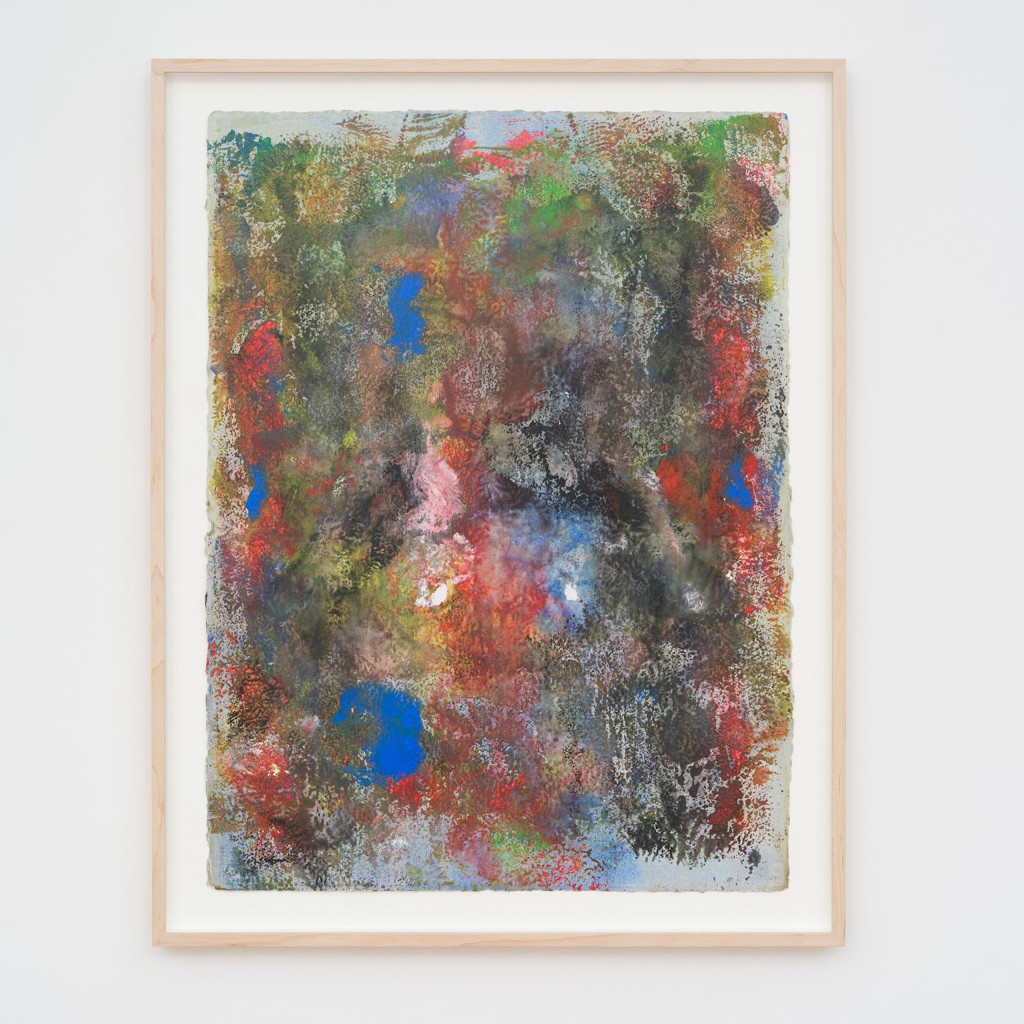
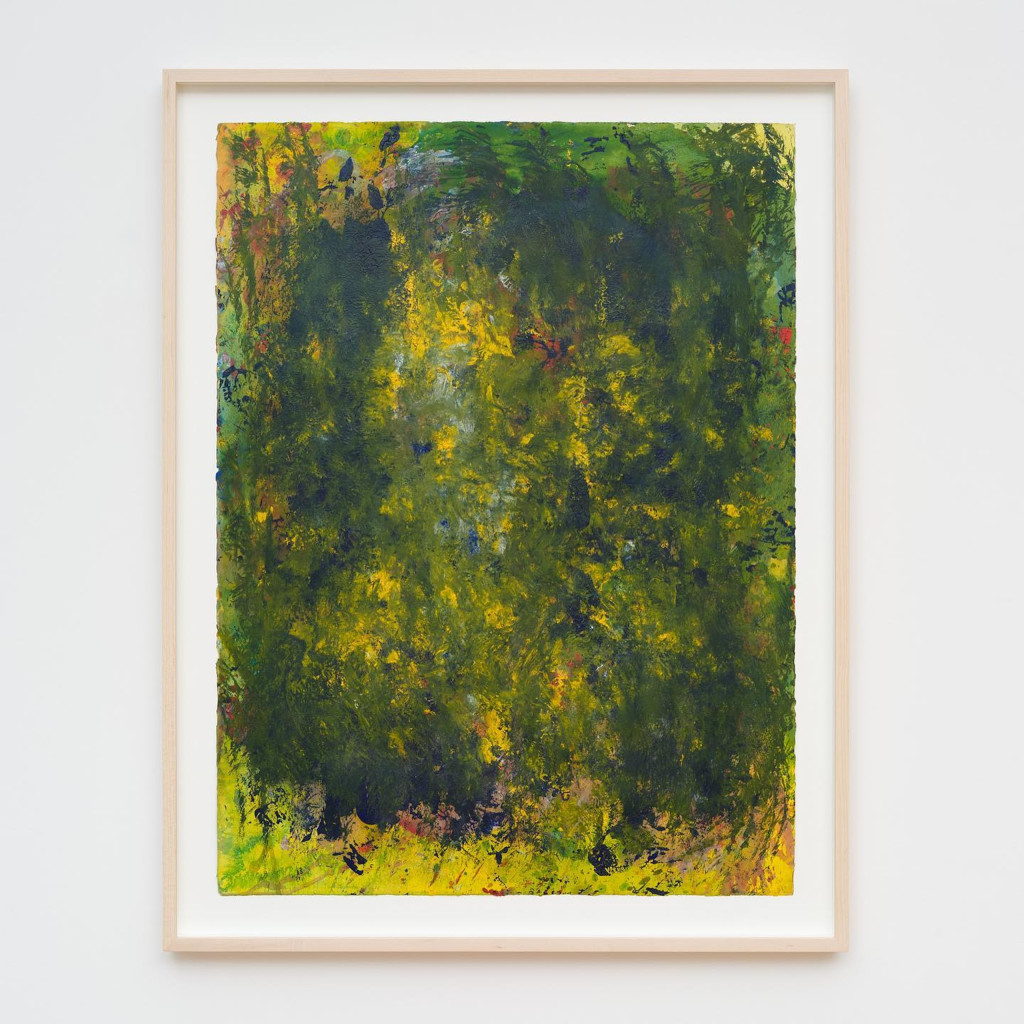
Taking light as his theme for these works of the past two decades, which include five acrylics on paper and two monoprints, mostly from the period 2002-2006 but including one more recent work from 2018, Branch takes abstraction into new territory by returning to the capacity of pigment to construct the effect of light and space. If the German émigré artist and teacher Hans Hofmann was right when he said, of his ‘push and pull’ technique of abstraction, that ‘in nature, light creates the colour… in the picture, colour creates the light’ then Branch has mastered this interplay. His is a way to let the light fall with the same enveloping transformations that we encounter on an early autumn lawn at dusk or seen through the heavy knuckles of a London fog. There are some paintings, like Untitled IV (2003), that capture the barely perceptible luminosity of a spring sky, all fleshy tones and cornflower yellow, while others, like Untitled I (2004) heave around a central gravitational axis, building the same atmospheric weight of a midwinter storm in an open field.
Branch’s works on paper bet on the adequacy of sheer form to propel them. In an extraordinary balancing act, the artist allows the dispersal of paint to flow just enough while exercising a Carthusian restraint to contain its meanderings travelling too far across his evolving compositions. It is in this way that he works not unlike a butterfly hunter, making use of sinewy, curved movements of control as though with a net as opposed to the brute functionalism of a snare.
These paintings are so tightly balanced between centre and periphery, shade and hue, surface and depth, that they always resemble something of the world outside their material contours, as though a distillation more of the remembrance of a place or a time as opposed to its graspable solidity. Textures of intensely sensitive touch, making forms quiver, pursue, and retreat is the most eloquent element of these works on paper. Colour is used to find forms, which so often evoke the contortions of bodily experiences, such as wounds or inflammations, as though they have been delicately transformed by the razor’s edge, with its perpetual threat of violence. The complicated surfaces of Branch’s paintings are aspects of work done one throw at a time. They are the outcome of diverse processes and procedures: dissipations of pigment, refractive and reflective layerings of acrylics, the fluid recordings of distributed lines.
In Untitled V, Branch develops a crisscrossing matrix of full-armed sweeps in the left field, a cacophony of vegetal greens overlaying ochre, while in the centre ground, a thrilling addition of luscious yellows compete for space and, in turn, offer an extraordinary pattern like the vague dispersals of a calligraphy master’s Rorschach test. In Untitled VI, one of the two monoprints, Branch has constructed such a dense conglomeration of paint that the dominant cobalt blue form, which is positioned centrally and heightened, appears to sit above the surface while the sheer depths of its total environment flickers with life.
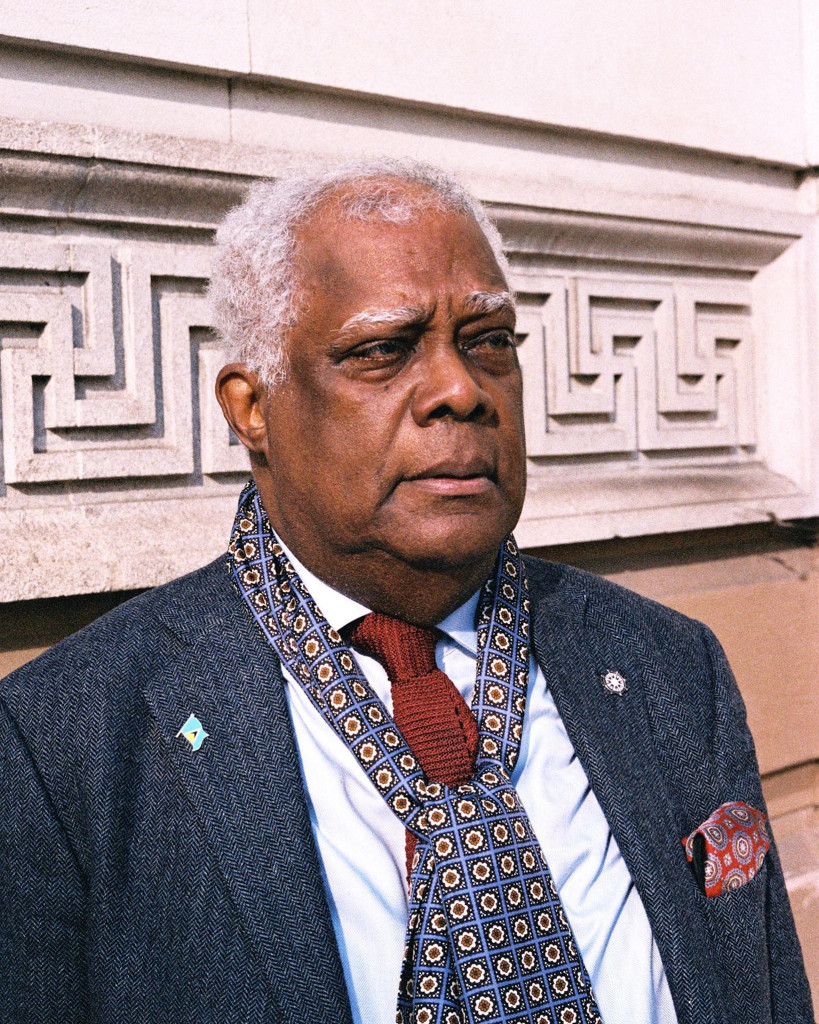
Born in St Lucia in 1947, Branch emigrated to England as a young man, even then a young artist, in 1958. He arrived into the throes of the capital’s art scene: The London School of David Hockney, Lucian Freud, and Francis Bacon was in full swing, and Branch’s first experiments leant themselves to comparative forms of figuration. The pathways of biography can often lead to a dead-end when appraising the work of a living artist (even an artist who, at the tender age of 76, is just getting started). But in Branch’s case, it seems relevant to sketch out just how many lives he has had, the significance of his move from abstraction to figuration after art school, and the blending of his artistic inputs from the Caribbean to London, Europe to California.
Following a degree at the Slade School of Fine Art in Bloomsbury, he was awarded the prestigious British Prix de Rome in 1971 which led to a residency at the British School at Rome, in a light-filled studio right by the Galleria Nazionale d’Art Moderna e Contemporanea, and an Artists-in-Berlin fellowship. (Indeed, by the time he had graduated from The Slade, he was the subject of celebrated exhibitions in Algeria, in the United States, and in France). Sometime later, and following in the footsteps of his friend David Hockney, Branch moved to California, and took up a professorship in fine art at UC Berkeley. Branch describes such peripatetic navigations as essential to his practice, and shares with Hockney the same sense of the possibilities of experience as the initial mode, well before the facile categorisations of being always of or from a particular locality. ‘Hockney is an artist first and foremost’, Branch tells me, ‘well before he is a Bradfordian or even a Californian: the same is true of me, and my work takes you much further than to St Lucia.’ A modest understatement, as ever, but a simple truth: the lives artists have lived and the worlds they have made will always find their way into the paintings, but there are more than the sum of them.
It is therefore, at least in part, a falsehood to say that his success has come late. Branch tells me, as a true English gentleman over a full lunch of fish and chips at a club in Chelsea, the art establishment ‘invited me to the table, but nothing was on my plate.’ Tate, as the national collection, was always the biggest prize. Now, there’s an awful lot to eat: in spring 2023, on the quieter side of the Thames from the racket of Charing Cross Road, Branch is also shown in an exhibition at Tate Britain, entitled ‘Sixty Years: The Unfinished Conversation’ as a companion to Sir John Akomfrah’s The Unfinished Conversation (2012) on the great cultural theorist Stuart Hall. It is his Zachary II (1982), a painting that restlessly moves towards a vision of the natural order of things as the truest abstraction of all. Ronald Alley, the long-time keeper of the Tate collection and enthusiastic admirer of Branch’s paintings, described them as part of an entirely abstract ‘tachiste idiom’: ‘Sometimes they seem to evoke memories of lush vegetation, reflections on water, sunlight and so on–the paint smeared and blotched in a dense veil-like mesh of colour- -but sometimes they are full of movement and erupt with a fiery incandescence.’
From a distance, these works flummox evaluation. Their composition oscillates between a period vogue of post-war painterly abstraction – comparative, you might say, to Frank Bowling and Auerbach – as well as the searing arcadian dreams of Claude Monet’s late style, his grande decorations. But Branch’s mode of painterly abstraction is inspired by his own relationship to nature, borne from but extending beyond his relationship to space –– not only to ‘nature’, which has its own abstractions in definition, but also to the spit and sawdust of the cities where he lives and has lived, in London, Berlin, Oakland, and Rome.
But what, when it comes right down to it, are Branch’s paintings about? What do they tell us about ourselves? Or about the world? The celebrated curator Kirk Varnedoe was at least partially right when he said that abstraction is all too easily categorised as merely ‘pictures about nothing’: ‘What’s the use’, he said, tongue against his chiselled cheeks, ‘for us as individuals, or for any society—of pictures of nothing, of paintings and sculptures or prints or drawings that do not seem to show anything except themselves?’ Well, if you look close, Branch’s paintings help to resolve this issue squarely: while abstraction may always be irreducible to an expression of colour in all its self-sufficiency, the truth is that abstract painting, in the hands of someone as technically vociferous as Branch, is always more than itself. It is always of the world, if not always––or ever––a representation of the world.
Of course, there is a way of reading abstract painting as a mediation of the material properties of colour, line, and composition and, equally reductively, as actually always representational in some capacity. The poet John Ashbery put this conundrum well when he reflected on Joan Mitchell’s Calvi series of remembered landscapes, but said a ‘black pentagon’ in one canvas looks no more like a cave than the squares in Mondrian look like skyscraper windows—that is, a confusion might be possible because of the limited number of shapes available, but everything in the intention of the painting is there to steer one away from it.’ The same is true of Branch: it’s easy to find in these abstractions the traces of line that resemble those of the world outside, from dendritic patterns in a frozen pond or the delicate venation of an insect’s wing, and yet these are paintings that hold their own internal logic of painterly self-sufficiency.
For me, it is in this way that Branch’s paintings are ‘poetic’ insofar as they each register to the viewer like a lyrical address to an absent other; they seem to take on the emergent qualities of meaning in the world and transform them into paint, no more and no less. In this, this series of paintings remind me of his fellow St Lucian émigré, Derek Walcott, and the narrative poem that gives this accompanying essay its title, and which closes:
There was nothing they wanted, nothing I could give them
but this thing I have called ‘The Light of the World.’
Standing in that safe and exhilarating place, in front of a Branch painting, we feel something similar. In their simple but absolute self- sufficiency of presence, they offer us exactly that: the light of the world. We want nothing more.
Exhibition catalogue essay by Matthew Holman