If you would like to request an exhibition catalogue please email: cedric@cedricbardawil.com
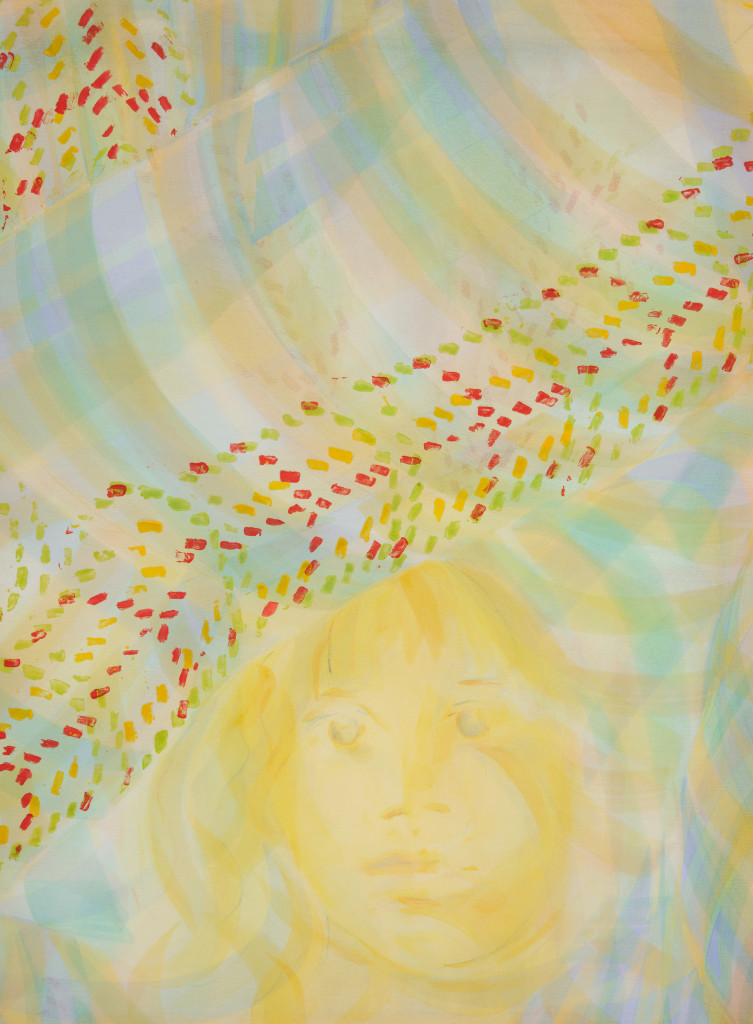
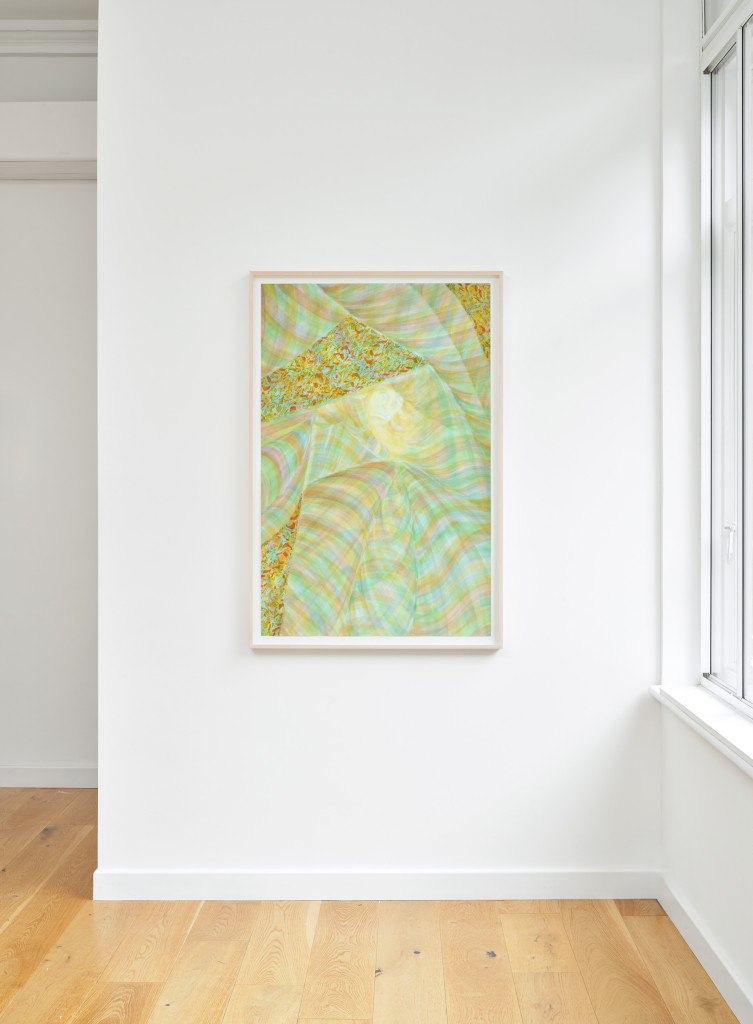
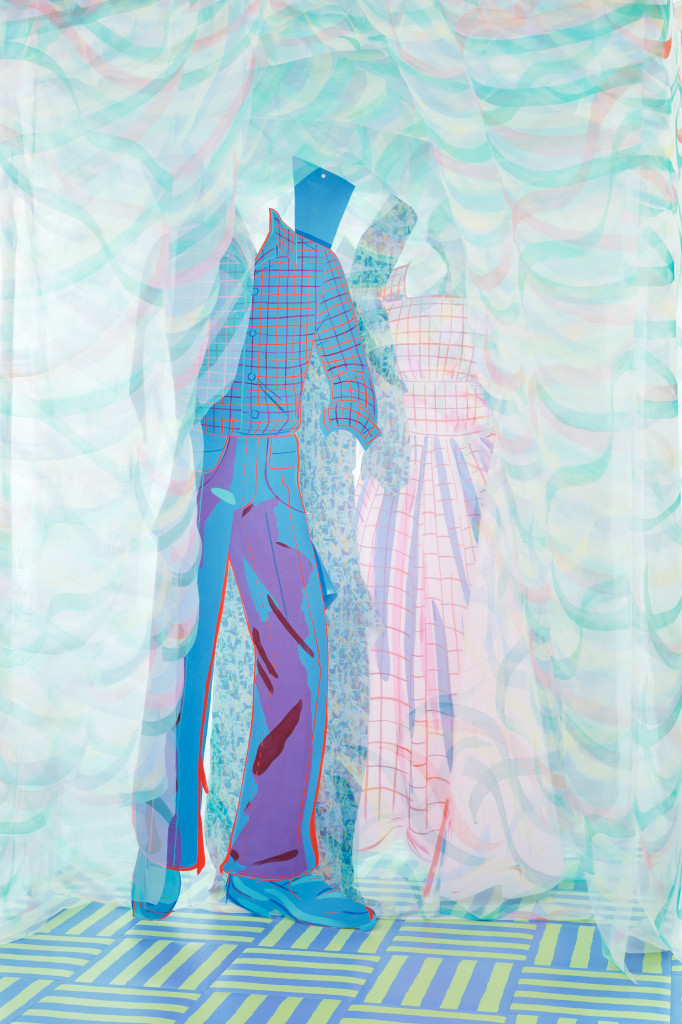
Staged Surfaces presents Hannah Tilson’s most ambitious body of work to date, bringing together new paintings, drawings, and an installation during Frieze Week. In the exhibition, fabric is reimagined as a stage, skin, and threshold all at once, where the folds, layers, and corners of her environment conceal and reveal in equal measure, suggesting private interiors where past and present coexist. At the heart of the exhibition, a den-like structure populated with patterned, life-size cut-outs stages a theatre of shifting viewpoints: no single vantage point holds, and each step redraws the composition. In her paintings, Tilson works in distemper, building layer upon layer only to interrupt the weaves and wefts with sharp lino-print impressions, while self-portraits emerge tangled in fabric, as bodies unravelled and reconstituted through pattern. Her palette hums and clashes with dazzling intensity, producing surfaces that never settle but continually open onto new configurations. Staged Surfaces is a choreography of looking where fabric refuses passivity, becoming performative and transformative.
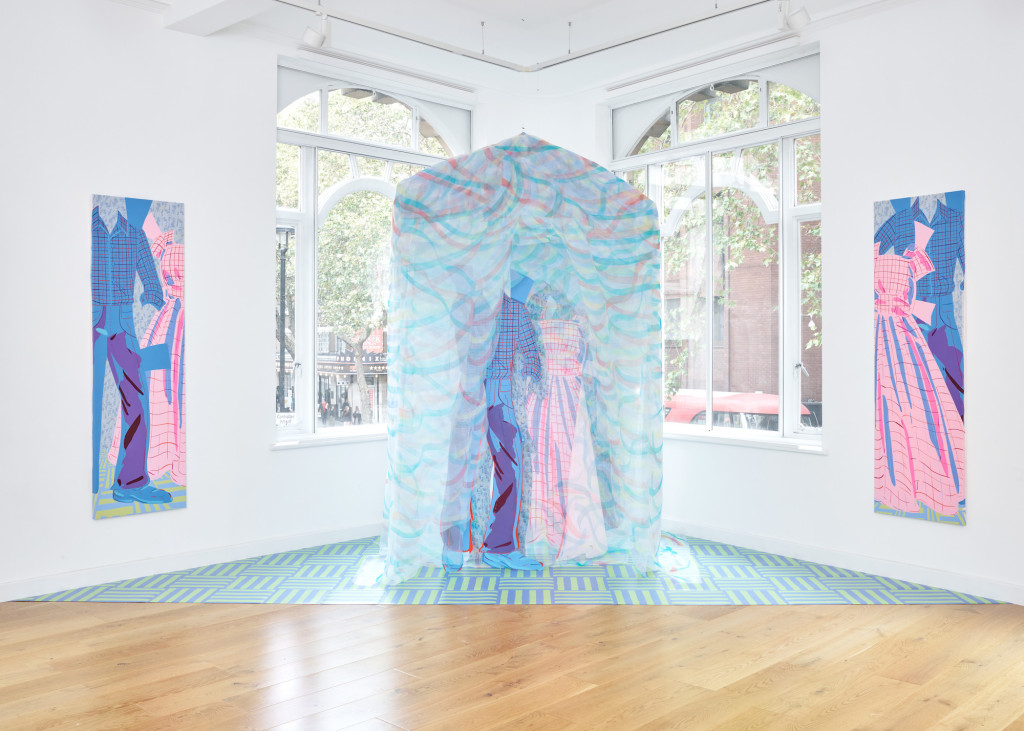
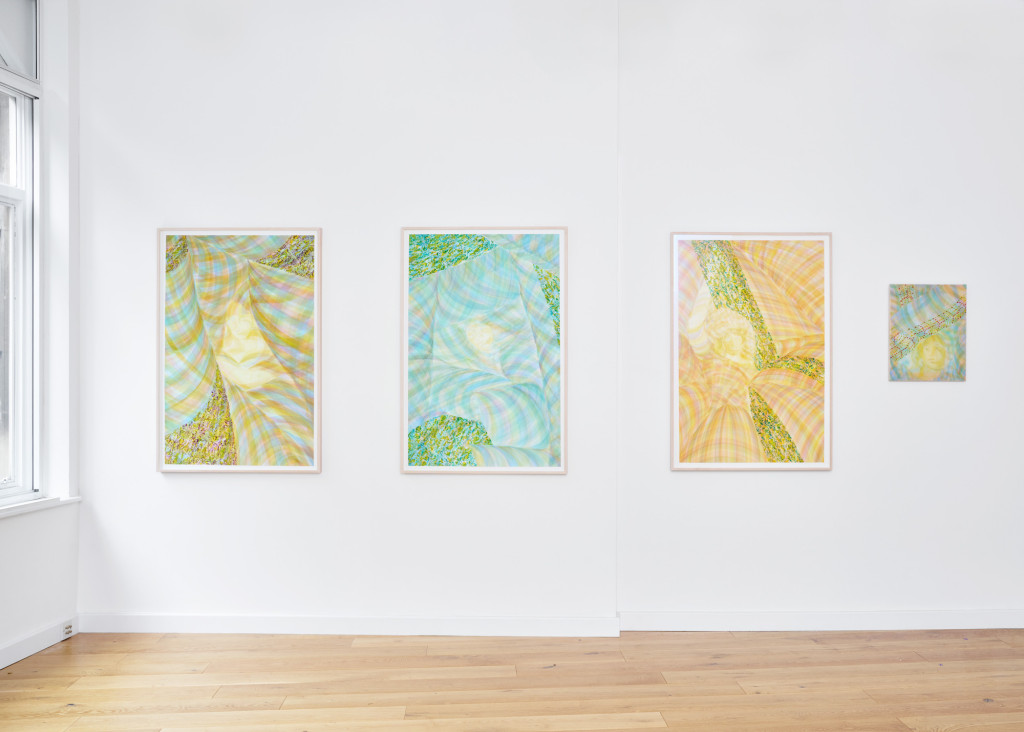
Fabric is never still. It folds and unfolds, endlessly turning back into itself and into the materials of the world. Italian theorist Giuliana Bruno reminds us that architecture is not only about fixed form, but about the surfaces that mediate our bodily encounter with the environment. Walls, draperies, and textures act as thresholds between inner and outer, body and world. In Staged Surfaces, Hannah Tilson’s practice moves within this porous terrain, between drawing, installation, painting, fabric, and patterns that become not separate modes but entangled threads in a meshwork of living surfaces.
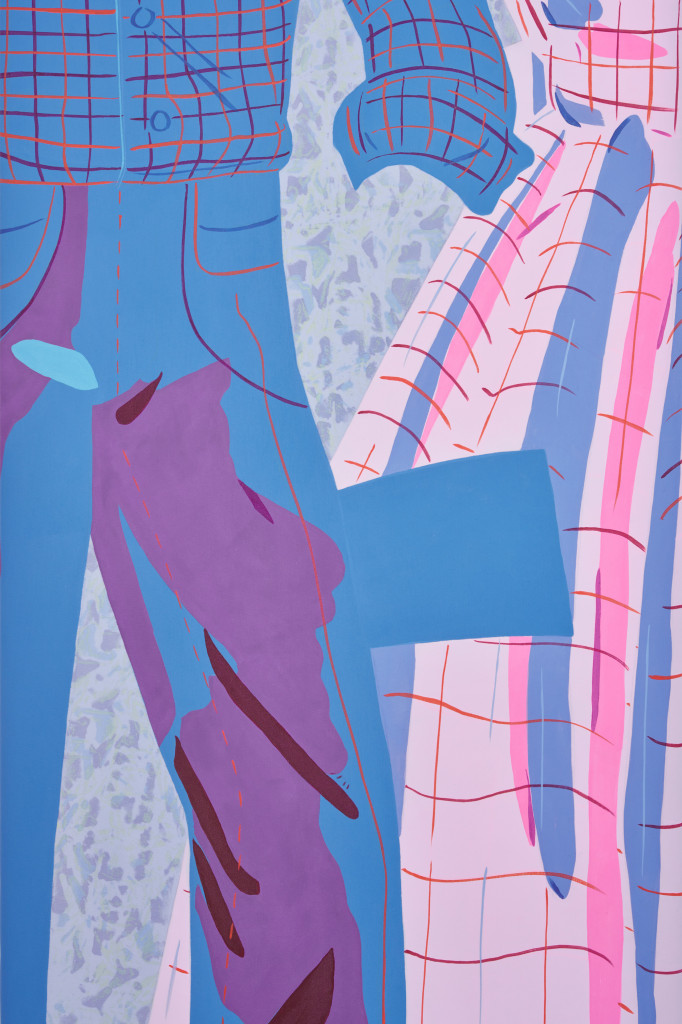
Across Tilson’s work in Staged Surfaces at Cedric Bardawil, fabric becomes both medium and metaphor. A den-like installation, Floating World, stages an environment that obscures and reveals, conceals and dramatises, folds and distorts. Within it, large-scale, human-sized paper cut-outs of figures dressed in pattern are arranged as if on a theatrical set, introducing a sense of performativity: fabric not just as backdrop, but as actor, and as body. This motif carries into the paintings, where the cut-out dolls and tiled flooring reappears, translated onto canvas, taking on a second life as painted figures and architectural features animated by colour and pattern. Navigating around the cut-outs and folds of fabric, one encounters shifting layers of visibility and concealment. No single vantage point offers a complete picture; each step redraws the composition, opening new alignments of figure, colour, and space. In this way, Tilson destabilises the fixed gaze of the gallery, replacing it with a choreography of looking: the viewer becomes part of the staging, drawn into the same interplay of surface and depth, opacity and transparency, that animates the work itself.
In her paintings, self-portraiture recurs, as Tilson appears wrapped in layers of unraveling cloth, her upper torso emerging through the weaves and checks. She works in distemper, a fragile medium where pigment is bound with gelatin to produce a delicate, matte surface that resists permanence. In her studio Tilson explains to me that the act of painting becomes excavation, as if she were an archaeologist, with layer upon layer built intuitively. These soft surfaces are punctuated by lino prints – small enough to hold in her hand – that leave sharp impressions that cut across the muted layers of paint, anchoring and disrupting its flow.
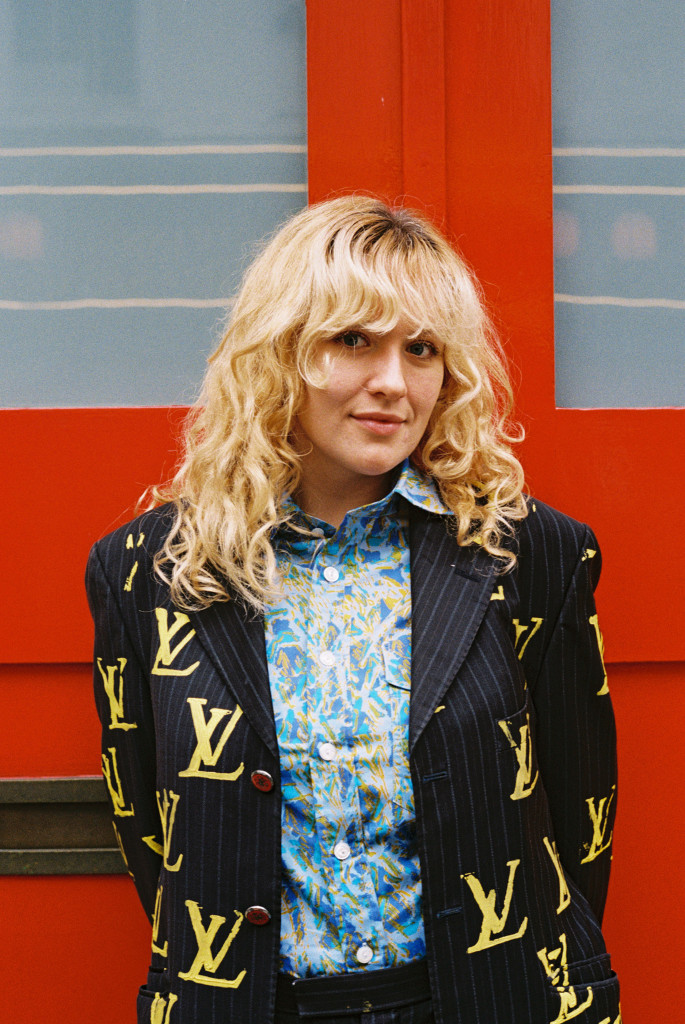
Tilson’s palette hums and clashes with dazzling intensity, producing a surface that never closes, but continually opens onto new dimensions. Her drawings, by contrast, are spare yet expansive, with confident coloured lines that read like self-portraits dissolving into woven structures. This concern with surface and skin extends beyond the canvas. Tilson collects secondhand suits and garments already carrying traces of past lives, which she then paints and linoprints onto, transforming clothing into a second skin. For Tilson, painting is always a form of world-building — whether on cloth, paper, wall, or body. In the painted suits, this logic reaches its most performative expression: the boundary between artwork and wearer collapses, and Tilson herself becomes a moving surface, a living canvas.
Anthropologist Tim Ingold describes life as made of lines: warp and weft, connectors and traces. Textiles make this visible – every thread is spun, stretched, and interlaced, carrying the memory of growth, labour, and touch. Tilson takes this idea beyond the fabric itself and into the gallery. Lines in her work are not only patterns on cloth or paper but also markers of space. They divide and reconfigure the room, creating areas that feel separate from the gallery’s existing architecture. These boundaries shape how visitors look through the installation. Instead of following a fixed route, viewers are invited to wander more freely, finding their own path through the work. Just as the crossing of warp and weft produces a fabric, her spatial lines weave together painting, drawing, and installation into a mesh of surfaces and thresholds.
To stand before Tilson’s work is to enter a staged surface: alive with folds, openings, and flickers of portals into other selves and other worlds – a space where pattern unsettles perception, and the body itself is reimagined as fabric. In her hands, fabric endlessly folds back into itself. It becomes both stage and skin: never passive, always performative, dazzling and porous, fragile and alive.
Exhibition catalogue essay by Sofia Hallström.