If you would like to request an exhibition catalogue, please email: cedric@cedricbardawil.com
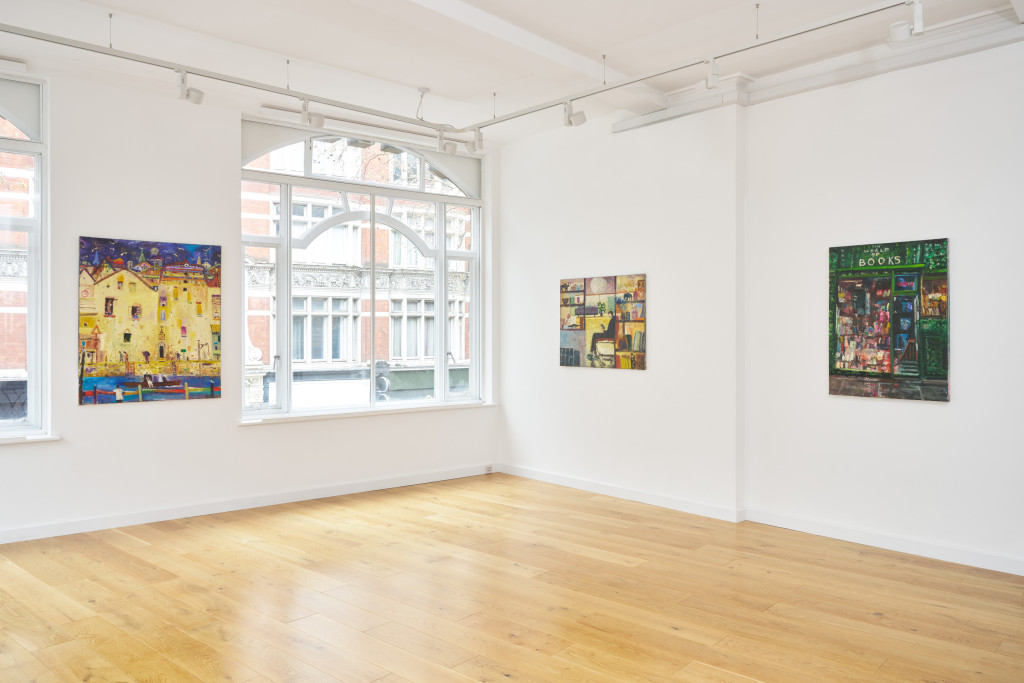
For Paul Housley’s second solo exhibition at the gallery, he has produced large-scale paintings for the first time in over 20 years.
“Housley is interested in the act of painting – he paints and paints until a canvas is thick with the oils – but he is also interested in how that very solitary, private act, is mediated. How the role of the artist is represented in the world outside the studio, and how one medium finds kinship or representation in another. Housley’s paintings, all new, from 2026, depict cinemas, bookshops, the home of the painter Rembrandt. These are places where artists are made characters. In Housley’s hands, however, none of the locations are specific but places pieced together by Proustian memories. They are paintings that recall the ideal smell of a cinema, the easy warmth of a bookshop, the reverential silence of a gallery.”
— Oliver Basciano
Essay by Oliver Basciano
The Lazy Perfectionist lies on his bed. He appears just in shorts, one leg cocked, his naked upper body propped up so he’s turning at us like a louche Courbet model, his head resting on one arm. Except he’s not looking at us, but at a canvas painted in the foreground of Paul Housley’s composition. We don’t get to see that work, it’s facing away on an easel. On the wall beyond the bed there are more representations of paintings, presumably by the titular Lazy Perfectionist, but ultimately by Housley himself of course. Worlds within worlds, representations of representations, media mediated. That’s for the viewer to decipher, the oxymoronic Lazy Perfectionist is content in a world of his own: he might be in bed, but he is concentrating on his canvas, as if, of late, this painting has consumed every waking moment.
Housley is interested in the act of painting – he paints and paints until a canvas is thick with the oils – but he is also interested in how that very solitary, private act, is mediated. How the role of the artist is represented in the world outside the studio, and how one medium finds kinship or representation in another. Other paintings here – Housley’s paintings, all new, from 2026 – depict cinemas, bookshops, the home of the painter Rembrandt. These are places where artists are made characters. In Housley’s hands, however, none of the locations are specific – even The House of Rembrandt is an approximation of the museum exterior in Amsterdam – but places pieced together by Proustian memories. They are paintings that recall the ideal smell of a cinema, the easy warmth of a bookshop, the reverential silence of a gallery.
In Everything Velvet, Housley paints the interior of a classic movie theatre. We see rows of red chairs, the blue carpeted aisles leading down to the screen framed with red curtains and an Art Nouveau proscenium. On the screen, easily recognised in the characters’ terrifying white uniforms, is a scene from A Clockwork Orange (1971). Housley doesn’t remember the first time he saw the Stanley Kubrick film, or whether he read the Anthony Burgess book initially (though, like Housley, Burgess grew up in the orbit of Manchester), but his painting conjures the ideal of a much-loved film premiered: the musty velvet, the luxurious gloom, and horror and excitement on the screen.
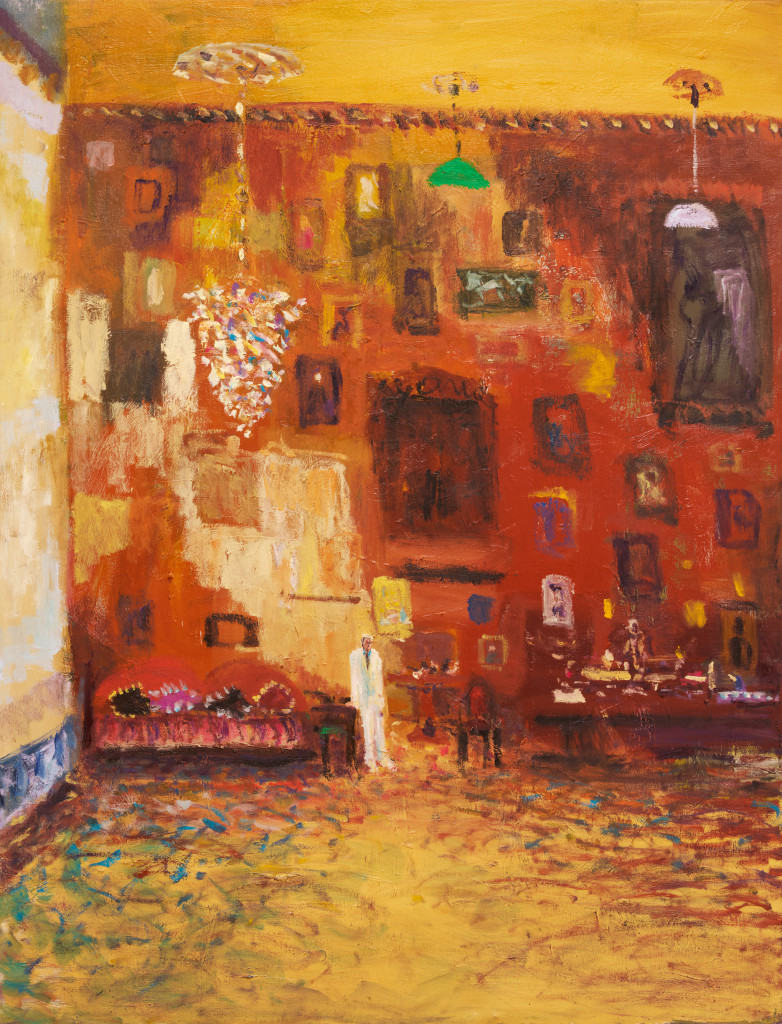
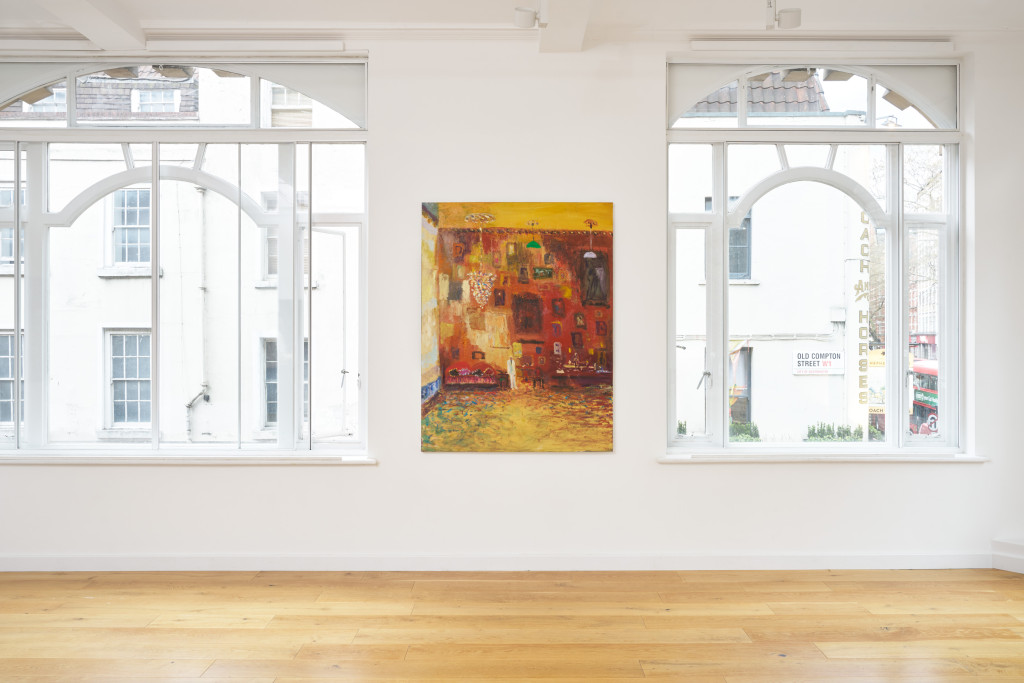
Housley’s work is romantic and literary, his canvases born of personal expression, but which also pay homage to the act and idea of that expression too, an acknowledgment that the imagined idea of the artist, the cultural weight the motif of a painter carries, undoubtedly has bearing on the unconscious act of creating paintings. Walking round this exhibition we might imagine the life this painter leads, an artist who may or might not be Housley himself: the artist as a young man, stepping into or out of the empty ruins of a nightclub in Something Like The Haçienda, the author and obituarist of a scene; the artist passing a photobooth in AutoFoto; the artist reading. We walk in his footsteps: a figure both lionised and satirised. In Empire of Solitude, we see the figure of Jay Gatsby in his mansion, his white suit apparitional, dwarfed by the architecture in which he stands. Behind F. Scott Fitzgerald’s 1925 character, staring down at him, hangs rows upon rows of paintings rising salon-style up the wall. The art is lit from a central chandelier, a light that blazes so brightly it feels like a fire about to consume this whole scene. Housley paints Gatsby as small and insignificant in comparison, a man burned by his hubris, a satirical cypher for any romantic lost to crumbling delusion.
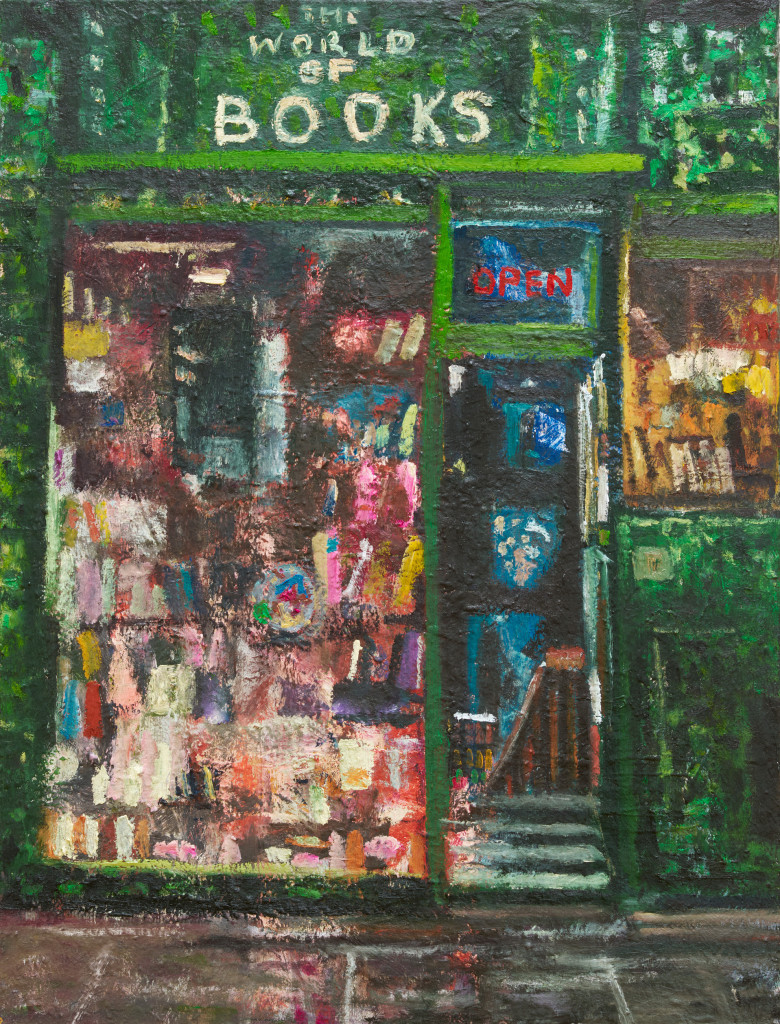
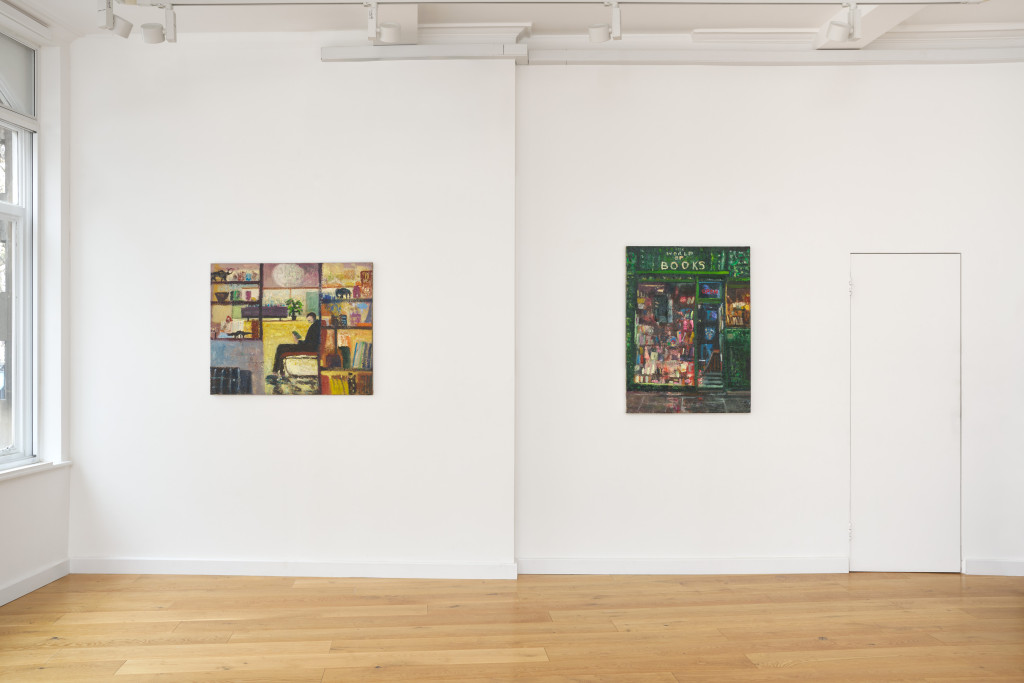
The Unknown Masterpiece, the 1831 short story by Honoré de Balzac, opens with a young Nicolas Poussin “promenading before the door”, summoning the courage to visit a great painter. Housley is interested in doorways and windows, framing devices that recall the parameters of the canvas, a portal and threshold to new scenes and senses. In the story, Poussin eventually enters the studio and there follows a tale of a great genius driven mad as he attempts to create a portrait with “the very hues of life”, a work so good that “art has vanished, it is invisible!” It is another story, like The Great Gatsby, Housley has come back to throughout his forty-year career, embracing the mania and chutzpah; conversely though, his work is not about art disappearing, indeed its materiality is foregrounded. Housley paints with the same micro-level of detail with which Balzac famously writes: each canvas built up with layers of information like the Frenchman’s sentences. Each gesture, every movement, every object described forensically. In Housley’s The World of Books, we stare through the glass frontage of a bookshop. The exterior is bottle green, though within the tiles or paintwork Housley gives us multitudinous tones and textures. Through the window, the bookseller’s display is rendered in mesmerising detail, no specific title apparent, but from Housley’s brush hundreds of stories emerge encased in red, yellow, blue, orange covers and more. This work is as busy as Empire of Solitude in its Balzacian detail, but the books seem to dance and sing through the window, they don’t hold the weight of the paintings in the latter, reflection of the book covers caught on the rain-soaked pavement outside like a wet disco floor.
This reference to reading, to the book motif, finds its partner in The Rooms That Brought Us Together Now Keep Us Apart, though here again Housley’s more satirical side emerges in this scene of bourgeois discontent. A man reads, his minimal library displayed neatly alongside tasteful objets d’art and potted plants. Housley contrasts the ambient yellow of the room with a silhouetted freestanding shelving in the foreground, the grid of the shelves suggesting a kind of imprisonment. It’s typical Housley: a place emerging as a repository for memory and emotion, cultural and personal; memories imagined, piecemeal and tentative.